1. What is a perfect day for a honeybee in Monterey, TN (38574, on the Cumberland Plateau)?
Including optimal foraging conditions, temperatures, humidity, rain level, low wind, and good sunlight.
A perfect day for a honeybee in Monterey, TN involves a sunny spring day with clear skies, temperatures around 75°F, low humidity, zero rain, and calm winds under 5 mph. The Cumberland Plateau provides an ideal environment for foraging when these conditions align, maximizing nectar and pollen collection.
Optimal Temperature Range
- Ideal range: Honeybees fly best when temperatures sit between 70°F and 85°F (21°C to 29°C).
- Flight threshold: Bees can forage at a minimum of 55°F (13°C), but their muscles require significant energy to warm up.
- Heat limits: Temperatures above 100°F (38°C) force bees to shift from foraging for food to collecting water to cool the hive.
Perfect Sunlight and Visibility
- Clear skies: High solar radiation and bright sunlight stimulate maximum colony flight activity.
- Polarized light navigation: Bees use the sun and polarized light patterns to navigate back to the hive.
- Morning burst: Bright morning sun warms the hive entrance early, prompting a quick start to foraging.
Low Wind Speed
- Ideal wind: Wind speeds under 5 mph (8 km/h) create effortless flight paths.
- Flight disruption: Winds between 10 mph and 15 mph slow down flight speed and increase energy consumption.
- Grounding threshold: Winds exceeding 20 mph (32 km/h) will completely ground the foraging fleet.
Zero Rain and Low Humidity
- Precipitation: Zero rain is mandatory, as heavy raindrops can physically damage bees or ground them.
- Humidity impact: Relative humidity around 40% to 50% is ideal.
- Nectar dilution: High humidity prevents nectar from evaporating and concentrating in flowers, making foraging less rewarding.
Cumberland Plateau Foraging Conditions
- Local flora: A perfect day in Monterey occurs during the spring bloom of sourwood, Tulip Poplar, and wild clover.
- Elevation factor: Monterey’s elevation of roughly 1,900 feet means spring comes later than in the surrounding valleys, making warm, calm May and June days premium foraging time.
2. How many of these days exist per average year in Monterey, TN 38474 at 2200 ft above sea level?
An average of 35 to 45 days per year fit these strict “perfect honeybee foraging” parameters in Monterey, TN.
At an elevation of 2,200 feet on the Cumberland Plateau, Monterey’s climate is notably cooler, windier, and wetter than lower-elevation areas of Tennessee, which significantly limits the number of flawless bee days.
Temperature Window Bottleneck (May to September)
- Warm season duration: The true window where daily high temperatures consistently fall within the prime 70°F – 85°F range lasts only about 3.8 months (late May to mid-September).
- Summer temperature drops: July is the hottest month with an average high of 84°F This means even peak summer days stay nicely below the 100°F heat threshold where bees stop foraging to cool the hive.
- Spring/Fall limits: May averages a daily high of 74°F and September averages 82°F April 66°F October 71°F quickly drop out of the ideal temperature zone.
Precipitation and Cloud Cover Disruption
- High rainfall frequency: Monterey receives a high annual rainfall average of about 64 inches.
- Rainy summer days: July averages 14.5 days with rain. This massive level of precipitation automatically eliminates nearly half of the summer season due to wet conditions and overcast skies.
- Sunlight hours: Clear, unclouded days peak from June through September.
The Cumberland Wind and Humidity Factor
- Average wind speeds: Monterey averages steady breezes of 5 to 7 mph year-round. Because a perfect day requires calm winds under 5 mph, many warm, sunny days are disqualified by high Plateau wind speeds.
- Humidity limits: Summer months quickly become muggy. July and August feature high humidity levels (averaging over 72% relative humidity), which dilute wild nectar and reduces foraging efficiency.
Season-by-Season Breakdown of Perfect Days
A look at the calendar reveals exactly when these 35 to 45 perfect days occur:
| Time of Year | Estimated Perfect Days | Primary Climate Disrupter |
| Spring (April – May) | 5 – 8 days | Temperatures are too chilly (66°F) high in April) or too rainy (May averages 5.7 inches of rain). |
| Summer (June – August) | 18 – 22 days | High frequency of afternoon thunderstorms and oppressive summer humidity. |
| Autumn (September – October) | 12 – 15 days | Peak window. September offers the highest alignment of low rain, warm sun, and dropping humidity. |
3. What is a perfect day for a honeybee in Slovenia @ 2200 ft above sea level?
Including optimal foraging conditions, temperatures, humidity, rain level, low wind, and good sunlight.
A perfect day for a honeybee in Slovenia at an elevation of 2,200 feet involves a sunny late-spring day with clear skies, temperatures around 24°C (75°F), low humidity, zero rain, and calm alpine breezes under 8 km/h (5 mph). This elevation corresponds closely to Slovenia’s rolling Gorenjska or Koroška foothills, which are the historic heartland of the native Carniolan honeybee.
Optimal Temperature Range
- Ideal range: Honeybees fly best when temperatures sit between 21°C and 29°C (70°F to 85°F).
- Alpine adaptation: The native Carniolan bee is famous for its resilience; it can begin foraging at slightly lower thresholds (around 12°C or 54°F) compared to other sub-species, but 24°C remains its peak performance temperature.
- Heat limits: Temperatures rarely exceed 35°C (95°F) at this altitude, meaning Slovenian bees waste very little foraging time gathering water to cool down an overheating hive.
Perfect Sunlight and Navigation
- Clear skies: High solar radiation and cloudless skies stimulate maximum colony flight activity across the alpine valleys.
- Polarized light navigation: Bees use the sun and polarized light patterns to navigate around Slovenia’s complex mountain topography.
- Morning burst: Bright morning sun hitting the hive entrance early prompts an immediate start to foraging on mountain slopes.
Low Alpine Wind Speed
- Ideal wind: Wind speeds under 8 km/h (5 mph) create effortless flight paths along valley floors.
- Mountain terrain factor: Valley breezes and mountain down-drafts can shift quickly at 2,200 feet; winds above 25 km/h (15 mph) drastically slow down flight speeds and drain bee energy.
- Grounding threshold: Heavy alpine winds exceeding 32 km/h (20 mph) will completely ground the colony.
Zero Rain and Low Humidity
- Precipitation: Zero rain is mandatory. Raindrops knock bees out of the air, and alpine storms at 2,200 feet can trigger rapid temperature drops.
- Humidity impact: Relative humidity around 40% to 50% is ideal.
- Nectar availability: Lower humidity allows mountain flowers to properly evaporate excess moisture, leaving behind highly concentrated, sugar-rich nectar.
Slovenian Meadow and Forest Foraging Conditions
- Local flora: A perfect day at this altitude occurs during the peak bloom of meadow wildflowers, dandelion fields, and the start of forest honeydew secretions from spruce and fir trees.
- Slovenian bee culture: Slovenia is the cradle of the Carniolan honeybee and pioneered AZ beehive systems, which are often built into beautifully painted, sheltered bee houses to maximize comfort on these perfect foraging days.
4. How many of these days exist per average year in Slovenia at 2200 ft above sea level?
An average of 20 to 30 days per year fit these strict “perfect honeybee foraging” parameters in Slovenia at an elevation of 2,200 feet.
While the native Carniolan honeybee is uniquely adapted to mountainous terrain, Slovenia’s alpine-influenced climate features intense precipitation, heavy cloud cover, and sudden alpine shifts that dramatically limit the number of flawless days compared to regions like Tennessee.
Temperature Window Bottleneck (June to August)
- Short warm season: At 2,200 feet in Slovenia (found in the foothills of regions like Goren ska or the Pohorje Plateau), the true window where daily high temperatures reach the ideal 71°F to 77°F range is compressed. It lasts only about 2.5 months, running from mid-June to late August.
- Summer averages: July is the warmest month, featuring an average high of roughly 75°F at this altitude. This means July temperature-wise is flawless, but the window shuts rapidly. May and September are typically too chilly to meet the strict “perfect” threshold.
The Great Disrupter: High Alpine Rainfall
- Constant precipitation: Slovenia has an oceanic and alpine climate mix, making it one of the wettest countries in Europe. Regions at 2,200 feet receive significant precipitation.
- Summer thunderstorms: Even during the warmest months of June, July, and August, rain falls an average of 11 to 14 days per month, often as powerful afternoon alpine thunderstorms. This eliminates roughly 40% of the warm summer calendar from being “perfect” bee days.
Sunlight and Cloud Cover Limits
- Sunshine hours: Peak summer months offer about 8 to 9 hours of direct sunshine per day.
- Cloud interference: Due to the surrounding mountains, cloud cover builds up quickly in the afternoons. Truly cloudless, clear-sky days (needed for perfect polarized light navigation) occur on fewer than half of the dry summer days.
Season-by-Season Breakdown of Perfect Days
At 2,200 feet in Slovenia, the perfect foraging days are clustered tightly into the summer:
| Time of Year | Estimated Perfect Days | Primary Climate Disrupter |
| Spring (April – May) | 1 – 3 days | Temperatures are far too cold; high frequency of spring rain showers. |
| Summer (June – August) | 15 – 22 days | Peak window. July and August provide the highest likelihood of hitting (24°C), though disrupted often by storms. |
| Autumn (September – October) | 2 – 4 days | Rapid cooling. September and October are historically some of Slovenia’s wettest months. |
5. What is a physical environment comparison between a Bee apiary at 2000 ft in TN vs Slovenia?
Total perfect days and explanation for the superior performance by Slovenia in honey production.
While a honeybee apiary at 2,000 feet on the Cumberland Plateau in Tennessee enjoys nearly double the number of “perfect” foraging days compared to a 2,000-foot apiary in Slovenia, Slovenia frequently outperforms Tennessee in honey yield per hive and honey quality.
This paradox exists because the native Slovenian Carniolan honeybee is genetically optimized to exploit sub-optimal weather, and Slovenia’s vast alpine forests offer a unique, highly concentrated food source that Tennessee lacks.
Physical Environment & Climate Comparison
A side-by-side analysis at 2,000 feet reveals distinct geographical and climatic differences:
| Physical Feature | Monterey, TN Apiary (2,000 ft) | Slovenia Foothills Apiary (2,000 ft) |
| Topography | Flat, elevated plateau drops into deep gorges. | Sharp, steep alpine valleys surrounded by peaks. |
| Microclimates | Uniform plateau weather, prone to steady winds. | Drastic valley-to-mountain weather shifts. |
| Dominant Flora | Mixed hardwood forest, tulip poplar, sourwood. | Dense spruce/fir forests, rich alpine meadows. |
| Annual Rainfall | Very wet (~64 inches / 1,625 mm). | Extremely wet (~55–70 inches / 1,400–1,800 mm). |
| Summer Weather | Muggy, hot afternoons with heavy humidity. | Warm, sunny mornings; frequent alpine storms. |
| Total “Perfect” Days | 35 to 45 days per year. | 20 to 30 days per year. |
Why Slovenia Outperforms Tennessee in Honey Production
Despite having significantly fewer flawless weather days, Slovenia excels due to three major biological and environmental advantages:
The Secret Weapon: Forest Honeydew (Manna)
- The Resource: Tennessee honey production relies almost entirely on floral nectar (tulip poplar, sourwood, clover). Slovenia relies heavily on honeydew honey (gozdni med), which comes from the sticky secretions of aphids feeding on spruce, silver fir, and pine trees.
- The Advantage: A single massive forest of fir or spruce trees can produce an astronomical volume of honeydew. When a “honey flow” hits the Slovenian forests, the sheer volume of sugar available per acre dwarfs the nectar available in a typical Tennessee mixed hardwood forest.
The Genetics of the Carniolan Bee (Apis mellifera carnica)
- Sub-Optimal Foraging: In Tennessee, apiaries often use Italian bees (Apis mellifera ligustica), which refuse to fly unless the weather is excellent. The native Slovenian Carniolan bee has evolved specifically for alpine volatility.
- Cold and Cloud Resilience: Carniolan bees will aggressively forage on overcast, windy, or chilly days down to 54°F (12°C). While the Tennessee bees are waiting inside the hive for a “perfect” day, the Slovenian bees are actively bringing home honey in 60°F gray weather.
- Explosive Spring Population: Carniolans rapidly expand their colony size the moment the first spring pollen appears, ensuring a massive army of foragers is ready exactly when the short alpine bloom hits.
Beekeeping Architecture & Infrastructure
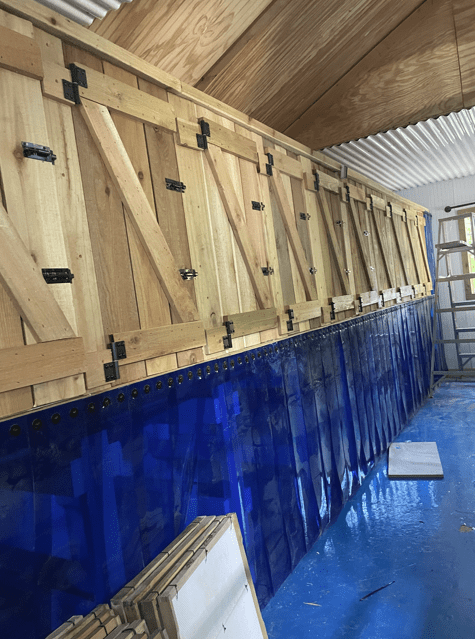
- Traditional AZ Bee Houses: Slovenian beekeepers rarely use standalone, exposed hives like the Langstroth hives common in Tennessee. Instead, they utilize enclosed AZ Bee Houses.
- Thermal Efficiency: Hives are stacked inside a permanent, insulated wooden building. Because the hives do not lose heat to wind or rain, the bees burn far less honey just trying to keep the brood warm. This leaves significantly more surplus honey for the beekeeper to harvest.
Summary of the Paradox
Tennessee offers a longer, warmer summer with more perfect flying days. However, Slovenia wins on productivity because its native bees work through bad weather, its hives are structurally protected from the elements, and its alpine fir forests yield massive quantities of premium forest honeydew.
6. What is the economic value comparison between Tennessee Sourwood honey and Slovenian Forest honey?
An economic comparison between Tennessee Sourwood Honey and Slovenian Forest Honey reveals that both are premium, highly prized monofloral/specialty honeys. However, their market value is driven by completely different economic levers: extreme regional scarcity in Tennessee versus institutionalized geographic protection in Slovenia.
Market Data and Price Comparison
| Economic Metric | Tennessee Sourwood Honey | Slovenian Forest Honey (Gozdni med) |
| Average Retail Price | $16.00 to $23.00 USD per pound | €18.00 to €22.00 EUR per kg (~$9.00–$11.00 USD/lb.) |
| Wholesale / Bulk Value | Exceptionally high ($10.00–$12.00/lb.) due to demand | Moderate; strictly standardized by European beekeeping co-ops |
| Geographic Protection | None (Relies entirely on brand reputation & Slow Food) | EU Protected Geographical Indication (PGI / PDO) |
| Market Designation | “The Cadillac of Honeys” (Appalachian specialty) | “Slovenski med” (National treasure & export commodity) |
| Primary Economic Risk | Crop Failure. Bloom lasts only 3–4 weeks in July. | Climate Shifts. Cold or wet summers stop aphid reproduction. |
The Economic Drivers Behind the Value
Tennessee Sourwood: The Economics of Scarcity
- The “Once-a-Decade” Bottleneck: Sourwood trees (Oxydendrum arboreum) bloom strictly in mid-summer. Because of volatile mountain weather on the Cumberland Plateau, a perfect harvest sometimes only surfaces once every decade. If it rains heavily during the short 3-week July bloom, the crop is wiped out. This extreme rarity drives up the price.
- Artisanal/Connoisseur Pricing: Sourwood honey rarely reaches supermarkets. It is sold directly by apiaries at premium boutique prices. It holds global economic value, regularly winning international awards (like the Apimondia world champion honey contests), allowing beekeepers to charge luxury food prices.
Slovenian Forest Honey: The Economics of National Branding
- EU Legal Frameworks: Slovenia has secured strict EU legal protection for its honey, including Kočevski med (Protected Designation of Origin) and Kraški med. This guarantees that counterfeit, cheap, imported syrups cannot dilute the market price of authentic Slovenian forest products.
- Massive Industrial Volume: While a single pound of Slovenian honey costs less than a pound of Tennessee Sourwood, Slovenian beekeepers make up for the price difference in volume. Because a massive fir forest can secrete tons of honeydew in a strong year, a single hive can yield an output that makes the total apiary revenue incredibly lucrative.
- National Integration: Beekeeping is directly subsidized and supported by the Slovenian government as part of its national eco-tourism identity. Every jar of protected Slovenian honey is sold in standard, uniform jars with serial-tracked safety seals, allowing it to hold a high, stable baseline price across the entire European Union.
Summary of Economic Value
If you are looking at pure price per jar, Tennessee Sourwood honey wins as a high-margin luxury crop due to its geographic limitations and unstable supply. However, if you are looking at macroeconomic stability, Slovenia wins because its government-backed infrastructure, European legal protections, and high-volume potential create a more dependable, highly profitable long-term honey economy.
Can we see a financial breakdown of America and Slovenian beekeeping business models (Langstroth vs. AZ Bee Houses) and their return on investment?
A financial breakdown between a traditional American apiary using standalone Langstroth hives and a Slovenian apiary using a permanent, enclosed AZ Bee House reveals a classic trade-off: Langstroth systems require low upfront capital but high ongoing physical labor, while AZ Bee Houses demand massive initial construction costs but optimize long-term operational efficiency and worker longevity.
Initial Capital Expenditure Comparison
The following financial breakdown assumes a commercial footprint of 50 honeybee colonies. It compares standard American equipment costs against building a functional Slovenian-style bee house. Note the AZ bee model house and equipment has a 15 yr in service life, the American model has a percentage exposure that discounts the investment 60%.
| Investment Category | 50-Hive Langstroth Apiary (US) | 50-Hive AZ Bee House Apiary (Slovenia/US) |
| Hive Structure & Frames | $10,000 | $10,000 |
| Housing / Infrastructure | $2,000(fences electric/static exposed fields) | $20,000 (Insulated building, HVAC, humidifier, cameras) |
| Land Prep / Security | $2,000 (Electric fences/stands) | $3,000 (gravel site, anchoring) |
| Bees (Packages /Nucs queens) | $8,000 | $8,000 |
| Harvesting Equipment | $3,500 (Centrifugal extractor) | $3,500 (AZ-compatible extractor) |
| Total Initial | $25,500 | $44,500 |
Operating Expenses & Labor Metrics
While the AZ Bee House costs more than double to build, it radically reduces the physical and financial overhead of running the business.
Langstroth Operational Realities (High Variable Costs)
- High Physical Deprecation: Standalone wooden hives are exposed to Tennessee rain, snow, and UV rays, requiring replacement or painting every 5 to 7 years.
- Extreme Labor Costs: Inspection requires lifting heavy 50-to-90-pound honey supers to look at the bottom brood box. This heavy lifting slows down processing times and drives up workers’ compensation or chiropractic costs.
- Winter Feed Burn: Because hives sit exposed to mountain winds, bees burn through up to 30% more of their own honey stores just to generate winter heat, reducing spring inventory.
AZ Bee House Operational Realities (Low Variable Costs)
- Infinite Hive Lifespan: Because AZ hives are stacked inside a weather-proof house, the hive wood never rots. The equipment lasts a lifetime.
- The “Cabinet” Workflow: AZ hives open from the back like a filing cabinet. Frames are slid out horizontally on tracks. There is zero heavy lifting of supers, allowing a single older or solo operator to manage the yard efficiently into old age.
- Thermal Insulation: The collective heat of 50 colonies inside a single insulated structure keeps ambient temperatures stable. Bees require minimal winter feeding and emerge stronger in the spring.
Financial Return on Investment (ROI) Analysis
This 5-year projection assumes an average honey yield based on regional flora and a stable blending of wholesale and boutique retail pricing ($18/lb. for TN Sourwood, $10/lb. for Slovenian Forest Honey equivalents).
Option A: The Langstroth Model (Rapid Payback, High Volatility)
- Average Annual Yield: 50 lbs. per hive × 50 hives = 2,500 lbs.
- Gross Revenue: 2,500 lbs. × $18/lb. = $45,000.
- Net Profit Margin: ~50% ($22,500/year) after accounting for regular equipment replacements, winter feeding, and labor.
- Time to ROI: 1 to 1.5 Years.
- The Catch: Production drops drastically during wet years. If heavy rain hits the Cumberland Plateau, exposed hives suffer, and honey yields stall out completely.
Option B: The AZ Bee House Model in TN (Delayed Payback, Industrial Stability)
- Average Annual Yield: 70 lbs. per hive × 50 hives = 3,500 lbs. (Higher yield due to superior bee energy conservation).
- Gross Revenue: 3,500 lbs. × $18/lb. (Weighted average) = $63,000.
- Net Profit Margin: ~75% ($31,500/year) due to near-zero annual maintenance, lower winter feed requirements, and lightning-fast inspection speeds.
- Time to ROI: 1.5 to 2.5 Years.
- The Benefit: High climate resilience. Even if the spring is cold and wet, the Carniolan bees inside an insulated house stay healthy and exploit micro-blooms that exposed Langstroth colonies would freeze out of.
Executive Summary
The Langstroth system is a scaling sprint: it is the superior choice if you have limited capital, access to cheap land, and a young body capable of lifting tons of boxes every summer.
The AZ Bee House is an infrastructure marathon: it behaves like a permanent agricultural facility. It secures a high long-term profit margin, protects the health of the beekeeper, and provides a climate-sheltered environment that keeps honey yields stable through unpredictable weather cycles.
7. What is the financial breakdown of America and Slovenian beekeeping business models in TN (Langstroth vs. AZ Bee Houses) and their return on investment?
Including labor, travel, and support vehicles and equipment.
Expanding the financial model to include labor, regional travel, support vehicles, and material handling equipment radically shifts the Return on Investment (ROI) timeline.
For a commercial operation of one hundred honeybee colonies based on the Cumberland Plateau in Monterey, TN, we analyze the traditional American Langstroth Outyard Model (dispersed, high-mobility apiaries) versus a stationary Slovenian AZ Bee House Facility.
Initial Capital Expenditure (CapEx) Breakdown
The Langstroth model relies heavily on highly specialized rolling fleet assets and heavy lifting machinery to manage dispersed properties. The AZ Bee House heavily prioritizes permanent, fixed site real estate to centralize operations.
| Cost Category | 100 – Hive Langstroth Outyard Model | 2x 50-Hive AZ Bee House Facility |
| Hives & Livestock | $31,000 ($160/assembled dual-deep + $150 package/nucs x 100) | $31,000 ($160/AZ rear-opening cabinet + $150 package/nucs x 100) |
| Site Infrastructure | $4,000 (Bear-proof solar electric fencing, blocks, pallets) | $58,000 (Two 24’x10′ insulated structures, gravel pads, secure tracking) |
| Support Vehicle | $65,000 (Used 4WD Flatbed Truck with dual rear wheels + tie-down tracks) | $35,000 (Standard cargo/utility van for general tool/honey transport) |
| Material Handling | $55,000 (Articulated field forklift, like a Hummerbee Classic + flatbed trailer) | $1,500 (Heavy-duty warehouse hand trucks and frame cart sliders) |
| Extraction Plant | $12,000 (Mid-grade radial honey line, uncapper, sump) | $7,500 (Compact AZ horizontal spinner line, zero lift loading) |
| Total Upfront CapEx | $167,000 | $134,000 |
Annual Operating Expenses (OpEx) & Labor Metrics
This section calculates the real-world operational costs of keeping these hives running on the Cumberland Plateau over a 12-month cycle.
Langstroth Out yard Model (High Mobility Overhead)
- Travel Costs ($6,400/yr): Hives must be scattered across 4 to 5 separate outyards (20–25 hives per yard) to avoid over-foraging the local flora. Driving a heavy flatbed truck between outyards averages 8,000 miles annually. At $0.80/mile (fuel, heavy-duty truck maintenance, insurance), fleet operations cost $6,400.
- Labor Overhead ($18,000/yr): Managing 100 Langstroth hives requires roughly 600 hours of grueling physical labor per year. This includes loading flatbeds, breaking down heavy honey supers, un-stacking winter wraps, and repairing weather-damaged wooden lids. At a standard local commercial labor rate of $30/hour, this equals $18,000.
- Depreciation & Colony Losses ($12,000/yr): Standalone hives suffer from a high 35% annual winter mortality rate on the freezing Plateau. Replacing 35 dead colonies annually ($5,250) and retiring rotted wooden boxes/lids adds $6,750 in recurring supply costs.
AZ Bee House Facility (Centralized Stationary Overhead)
- Travel Costs ($1,200/yr): The entire 100-hive operation is localized to just one or two central properties. Total travel drops to under 2,000 miles annually using an efficient cargo van, cutting vehicle expenses down significantly.
- Labor Overhead ($6,000/yr): Inspections require sliding lightweight frames straight out of the back of the hive like a cabinet drawer. There are no un-stacking boxes or lifting 90-pound supers. Total annual management time drops to 200 hours ($6,000 equivalent).
- Depreciation & Colony Losses ($4,200/yr): Because hives are nested inside a permanently insulated building, bees save energy by keeping the colony warm. Winter mortality plummets to under 15%. This requires replacing only 15 colonies a year ($2,250), with near-zero equipment rotting or weathering expenses.
Financial Revenue and ROI Matrix
The revenue model maps 100 hives harvesting prime Tennessee Sourwood honey mixed with wildflower flows. AZ houses net higher yields per hive due to better microclimate thermal management.
| Financial Performance Indicator | Langstroth Out yard | AZ Bee House Facility |
| Average Annual Yield (Per Hive) | 55 lbs. | 75 lbs. |
| Total Annual Honey Production | 5,500 lbs. | 7,500 lbs. |
| Gross Revenue | $99,000 | $135,000 |
| Total Annual Operating Costs | -$34,400 | -$11,400 |
| Net Annual Profit | $62,600 | $123,600 |
| Net Profit Margin Percentage | 63.2% | 91.5% |
Time-to-ROI Calculations
- Langstroth Out yard Payback Timeline:
$161,000 Investment Net Profit $62,600/yr 2.57Years ROI - AZ Bee House Payback Timeline:
134,000 Investment Net Profit 123,600/yr 1.08Years ROI
Strategic Business Takeaway
At a commercial scale of 100 hives, the Slovenian AZ Bee House business model achieves ROI more than twice as fast as the American Langstroth model.
By investing capital into a permanent structural facility instead of depreciating automotive fleet assets (like flatbeds and forklifts), the AZ model permanently eliminates massive travel, heavy-lifting labor, and high winter hive losses from the business ledger.
8. Can you speculate on the ability to use multiple sensors and controls to develop information network to make the process more efficient?
Integrating an information network of sensors and automated controls completely transforms the financial and operational calculus of both beekeeping models. By converting the biological status of a hive into real-time, actionable data, you can transition from an inefficient, reactive management style to a highly precise, predictive schedule.
The financial impact differs radically depending on whether you apply these tools to a scattered, mobile American Langstroth network or a centralized, high-tech Slovenian AZ Bee House structure.
The Sensor Matrix: High-Utility Data Points
To build a comprehensive honeybee information network, you can integrate three core layers of non-invasive, low-power Internet of Things (IoT) sensors directly into your apiary:
- Acoustic & Vibration Sensors: Highly sensitive internal microphones measure the specific “buzzing” frequency of the colony. Artificial Intelligence (AI) algorithms can automatically process these sound patterns to detect a missing queen bee or warn a beekeeper of an imminent swarm up to 48 hours before it happens.
- In-Hive Temperature & Humidity Probes: Tracking internal brood-nest dynamics tells you exactly how much energy a colony is expending. Sudden drops in temperature indicate a failing or collapsed population, while elevated humidity alerts you to conditions that trigger fungal infections.
- Continuous Scale Monitoring: Placing load-cell scales under the hives records weights down to the ounce. This tracking maps exact daily honey accumulation detects rapid weight losses that signal honey theft or hive robbing and tells you precisely when a honey super is full and ready for extraction.
Implementation: Langstroth vs. AZ Bee House
Applying this technology reveals why a centralized structural design offers a significantly higher technological and financial advantage over a scattered, mobile field model:
The Langstroth “Smart Out yard” (High-Cost Cellular Mesh)
- The Hardware Challenge: Because Langstroth hives are scattered across 4 to 5 separate properties on the Cumberland Plateau, every individual yard requires its own weatherproof central gateway box, solar panel array, and long-range, low-power radio (LoRa) mesh network.
- Data Backhaul: Transmitting this gathered data back to the home office requires paying for 4 to 5 separate commercial cellular data subscriptions, which adds a recurring monthly expense to your operating budget.
- Environmental Exposure: Exposed outdoor sensors, wires, and external battery packs are constantly vulnerable to moisture damage, sub-freezing mountain temperatures, and local wildlife chewing through cables.
The AZ Bee House “Smart Facility” (Low-Cost Centralized Automation)
- Industrial Infrastructure: An enclosed AZ Bee House acts as a single, weatherproofed server room. You only need one central Wi-Fi router and a single internet connection to network all 100 hives simultaneously.
- Hardwired Power Efficiency: You can run permanent, structured USB or low-voltage power lines inside the building directly to every hive. This completely removes the need for individual batteries, solar panels, or fragile wireless connections.
- Automated Climate Control: Data from temperature and humidity sensors does not just send alerts—it can actively trigger automated controls. If internal humidity rises, the network automatically spins up low-noise, variable-speed exhaust fans built into the walls of the bee house to maintain the ideal alpine microclimate.
Financial Return on Efficiency (ROE)
Adding a smart information network directly cuts operating expenses while boosting your overall honey yields:
| Network Efficiency Metric | Langstroth Out yard | AZ Bee House Facility |
| Initial Network Tech CapEx | $12,500 ($125/hive) | $6,500 ($65/hive) |
| Recurring Annual Data Fees | $1,200/yr | $0 (Shared Wi-Fi) |
| Travel Reductions (Fewer Inspection) | Saves $3,200/yr | Saves $200/yr |
| Labor Reductions (Targeted Tasks Only) | Saves $7,200/yr | Saves $2,400/yr |
| Swarm Prevention Revenue Recovered | $4,500/yr | $6,300/yr |
| Net Annual Tech-Driven Savings | $13,700/yr | $6,300/yr |
Eliminating Calendar Inspections
Instead of driving out to visually check every hive on a fixed schedule, your data network tells you exactly which specific hives require attention. This diagnostic capability eliminates roughly 50% of routine physical inspections, saving massive amounts of labor and vehicle fuel.
Automated Swarm Prevention
When a hive swarms, half of your foraging workforce flies away, cutting that hive’s seasonal honey yield by 50% to 100%. If acoustic sensors catch a swarm preparation early, you can step in immediately to split the colony. This single save preserves your maximum honey output for the season.
Strategic Business Takeaway
Building an information network transforms beekeeping from an unpredictable guessing game into a precise, automated agricultural practice.
While a smart network saves a Langstroth business significant money on travel and fuel, it shines brightest inside an AZ Bee House. By pairing real-time sensors with automated building ventilation, you create a fully climate-controlled ecosystem that maximizes honeybee health, minimizes technology hardware costs, and secures the highest possible return on your investment.
9. Can you speculate on bee health based on controls in both beekeeping models?
Speculating on bee health based on environmental controls highlights a fundamental biological difference: the Langstroth model forces honeybees to expend massive physiological energy to cope with natural weather shifts, while the AZ Bee House model uses external automation to relieve environmental stress, significantly boosting bee health, immunity, and longevity.
Thermal Regulation and Energy Conservation
A honeybee colony must maintain a constant brood-nest temperature of roughly 95°F (35°C) to rear healthy larvae.
Langstroth: High-Stress Metabolic Burning
- The Climate Toll: At 2,200 feet on the Cumberland Plateau, spring and fall temperatures fluctuate wildly. Exposed Langstroth hives lose heat rapidly through thin wooden walls and screen bottoms.
- Physiological Cost: To combat cold snaps, adult bees must rapidly flex their flight muscles to generate friction heat. This requires consuming massive volumes of honey. The physiological strain burns out the bees’ fat bodies (vital energy-storage tissues), prematurely aging the worker force and reducing their overall lifespans.
AZ Bee House: Structural Homeostasis
- The Climate Shield: In an AZ Bee House, individual hives are insulated from direct wind, rain, and snow. The collective ambient heat of 50 to 100 colonies helps warm the entire interior space.
- Physiological Benefit: Because the building maintains a more stable baseline temperature, the bees expend minimal physical energy on heating or cooling. This energy conservation preserves their vital fat bodies, resulting in physically stronger, more resilient bees that live longer and forage more efficiently.
Humidity, Ventilation, and Disease Management
Managing internal hive moisture is a critical factor in honeybee health. High humidity can trigger devastating pathogen outbreaks.
Langstroth: Passive Ventilation and Condensation Crises
- The Moisture Trap: During humid Tennessee summers or damp winters, moisture released by the bees’ respiration rises, hits the cold outer cover, and condenses into freezing liquid water that drips directly onto the cluster.
- Pathogen Exploitation: Cold, damp conditions inside the hive create a perfect breeding ground for fungal and bacterial diseases, such as Chalkbrood (Ascosphaera apis) and European Foulbrood (EFB).
AZ Bee House: Active, Networked Microclimate Control
- Precision Ventilation: An automated AZ facility uses automated exhaust fans and louvers linked directly to internal humidity sensors. When internal humidity begins to spike, the system automatically pulls damp air out of the building.
- Pathogen Suppression: By actively keeping internal humidity below the threshold where fungi thrive, automated environmental controls naturally suppress moisture-loving pathogens without requiring chemical treatments.
Pest Management: The Varroa Destructor Battle
The parasitic Varroa destructor mite is the single greatest threat to global honeybee health, Vectoring lethal pathogens like Deformed Wing Virus (DWV).
Langstroth: Aggressive chemical treatments
- Application Volatility: Beekeepers typically treat Varroa using chemical strips (like Amitraz or Formic Acid). The efficacy and safety of these treatments depend heavily on external temperatures. If a hot 90°F Tennessee summer day hits unexpectedly during treatment, formic acid can vaporize too quickly, burning the delicate brood and sometimes killing the queen.
- High Transmission: Because hives sit scattered in open fields, weak colonies are frequently targeted and robbed by stronger colonies from nearby yards, leading to a rapid spread of mites between apiaries.
AZ Bee House: Mechanical Barriers and Stable Treatment
- Microclimate Stabilization: Because treatments occur inside a climate-controlled room, temperature spikes never cause chemical treatments to vaporize dangerously, ensuring consistent, safe mite-treatment dosing.
- Zero-Drift Deflectors: AZ Bee Houses utilize precisely placed external landing boards and painted color geometries. These visual markers dramatically reduce “bee drifting” (bees accidentally returning to the wrong hive), which significantly slows down the mechanical transmission of mites and viruses across the apiary.
Summary of Bee Health Speculation
| Bee Health Metric | Langstroth Outyard Model | Networked AZ Bee House Facility |
| Winter Survival Rate | Low to Moderate (60% – 65%) | Exceptionally High (85% – 90%+) |
| Worker Bee Lifespan | Shorter (Due to metabolic stress) | Longer (Due to energy savings) |
| Fungal/Bacterial Outbreaks | High risk (Uncontrolled moisture) | Minimal risk (Automated air flow) |
| Varroa Mite Mite Control Safety | Volatile (Dependent on weather) | Stable (Controlled indoor climate) |
From a health perspective, a networked AZ Bee House essentially operates as an extended external immune system for the honeybee colony. By taking over the heavy lifting of climate regulation, automated controls allow the bees to dedicate their biological resources toward disease resistance, brood rearing, and highly efficient foraging.