The Makers IP Bee House is an ongoing experiment based on the traditional Slovenian AŽ hive design. Read more about the Bee House experiment here.
In this post, we detail the electronics we use to power, monitor, and maintain the Bee House. The system currently breaks down into four categories:
- Connectivity
- Smart HVAC
- Sensors
- Monitoring
Connectivity
- Grid power (with plans to transition to 100% solar)
- Starlink Satellite internet
- Ueevii Wireless Bridge Model CPE990
- TP-Link Archer AX55 AX3000 Router
How It Works The Bee House is located on our family farm in Monterey, Tennessee, near the main house. We currently run power from the house to support the HVAC, sensors, and cameras. We are actively testing solar power systems for reliability, ease of installation, and cost-effectiveness. Updates will follow once we select a system.
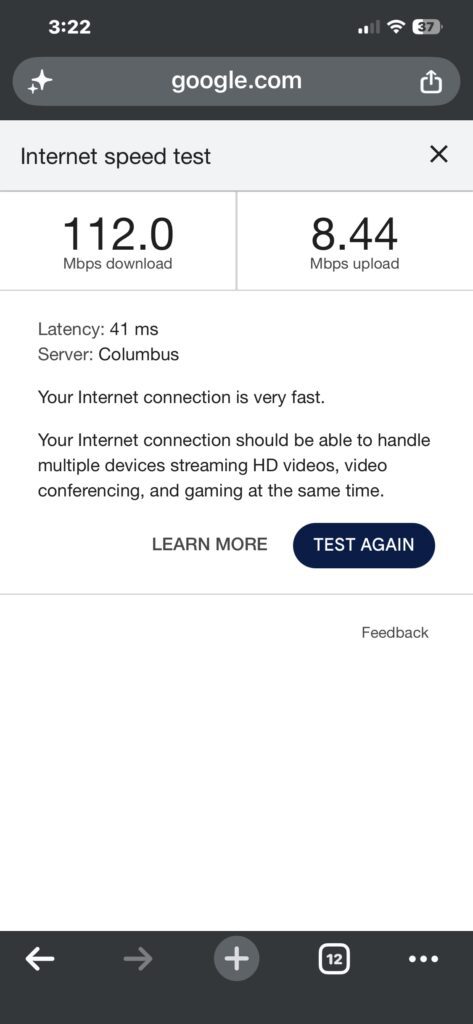
For internet, we chose Starlink after trying multiple options. It offers dependable service and strong speeds despite heavy tree cover. We installed the Starlink dish at our shop, about 350 feet away, and use a Ueevii wireless bridge to connect the house and Bee House. This setup has delivered consistent, reliable connectivity for nearly three years across the house, shop, and Bee House.
From the bridge, we split the signal and installed a dedicated TP-Link Archer AX55 AX3000 router in the Bee House. Setup was simple, and performance remains excellent.
Smart HVAC
- Rovsun 12,000 BTU Wi-Fi Mini Split (heating & cooling)
- VEVOR Dehumidifier Model OL12-D031K (non-Wi-Fi)
- VEVOR Greenhouse Heater with Thermostat, 1500W (non-Wi-Fi)
- Humidifier (planned future purchase)
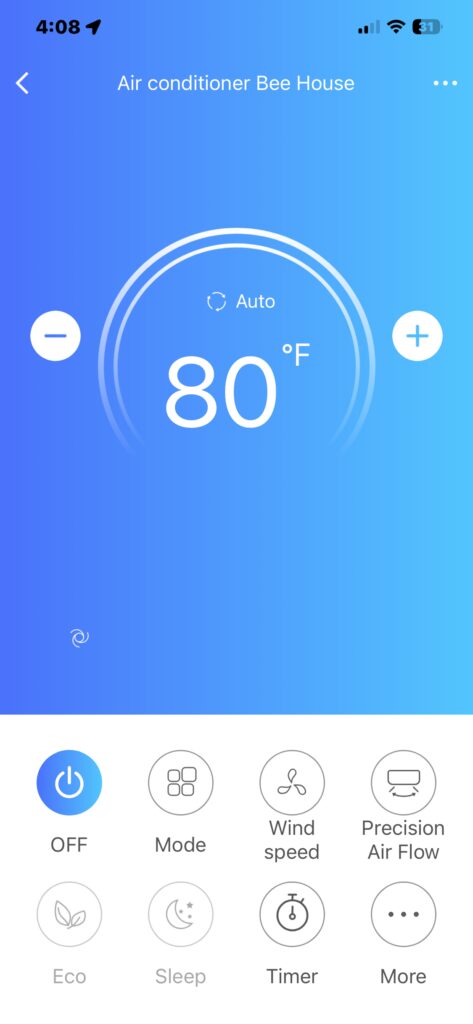
How It Works We maintain optimal conditions with a Rovsun 12,000 BTU Wi-Fi Mini Split. It is compact, quiet, energy-efficient, and easily controlled via app. Installed three years ago, it continues to perform reliably.
The VEVOR dehumidifier connects to an Inkbird controller that turns it on automatically as needed. Its built-in drain hose eliminates manual emptying and overflow risk. Together, they keep the Bee House at approximately 80°F and 50% humidity.
A VEVOR greenhouse heater provides backup heat when required. We plan to add a compatible humidifier soon.
Sensors
- Inkbird Humidity Controller IHC200 (non-Wi-Fi)
- Inkbird BS-TH1 Thermometer & Hygrometer with Waterproof Probe (Bluetooth)
- Govee Home h5575 Hygrometer Thermometer (Bluetooth)
How It Works The Inkbird IHC200 is a reliable plug-and-play controller that uses an external probe to manage the dehumidifier (and soon the humidifier). Setup was straightforward and the results have been excellent.
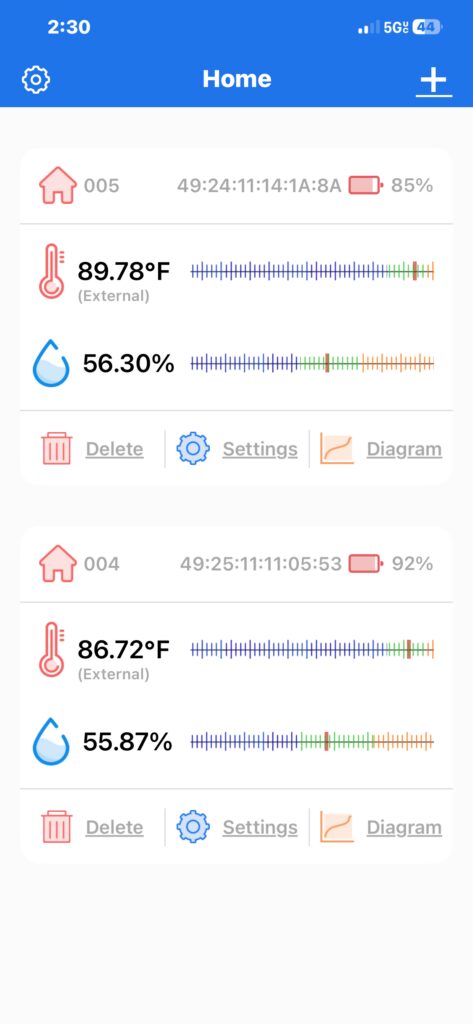
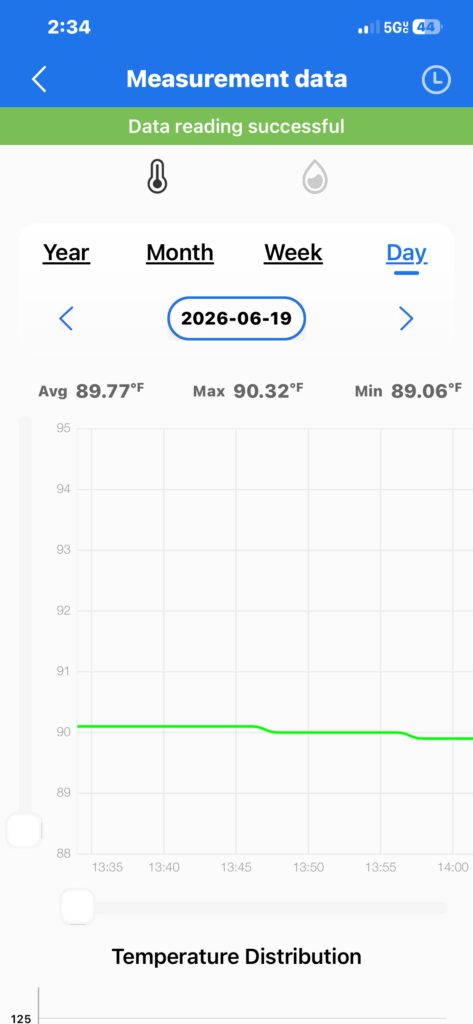
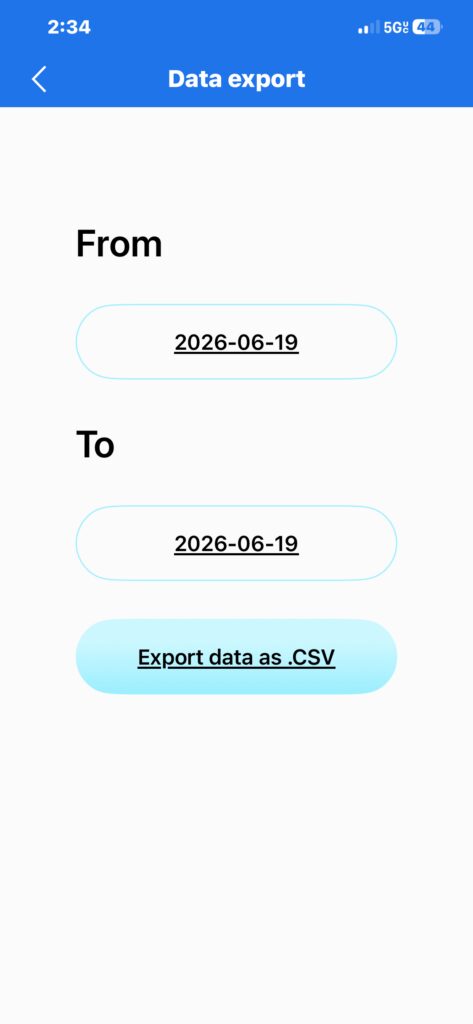
For hive-level monitoring, we use the Inkbird BS-TH1. It offers strong reliability, good Bluetooth range, and easy data export to .CSV for a full year of records per hive.
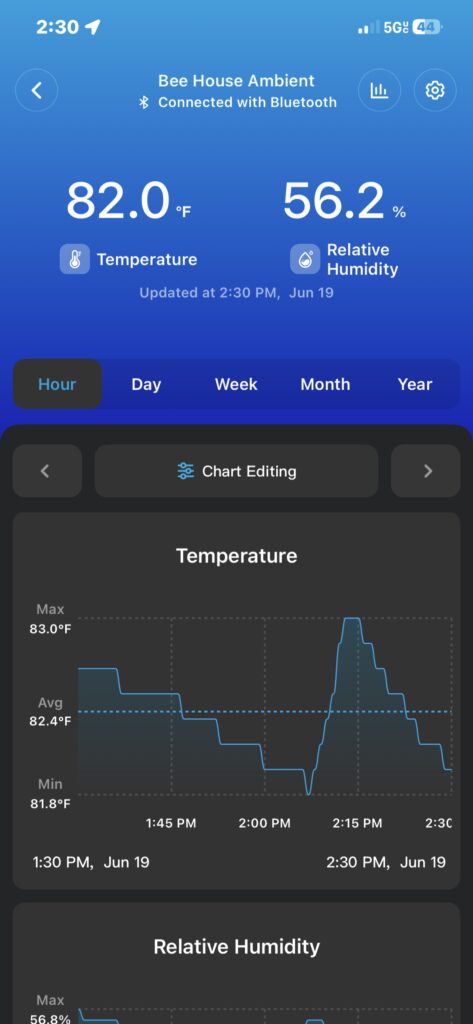
We monitor ambient conditions in the Bee House with a Govee h5575. While the unit performs well, its Bluetooth range is limited. We are evaluating alternatives.
Monitoring
- Wyze Cam v4 (6 units)
- TP-Link Tapo C206 Hybrid Cam 1080P (6 units)
- VIMKIM Solar Security Camera Model DM324 (outdoor)
- Bluetooth-to-Wi-Fi Gateway (planned)
Beekeepers install cameras at hive entrances to monitor colony health, activity, and security in real time without disturbing the bees. These non-invasive tools provide valuable insights for better management and timely intervention.
Entrance cameras help track bee traffic and foraging behavior (such as pollen collection) to assess colony strength. They also detect pests and predators like wasps, hornets, skunks, mice, or bears. Additionally, they provide early warnings of swarming behavior, support security against theft or vandalism in remote locations, and enable data-driven insights—some advanced systems even use AI for bee counting and health predictions. Thermal or infrared cameras can further monitor the bee cluster during winter without releasing vital heat.
Our Setup We receive frequent questions about our camera setup. After testing multiple brands, here’s what we use:
Wyze Cam v4 – Affordable, easy to set up, excellent low-light performance, and strong app support. We use six outside the Bee House to monitor hive entrances for bee movement and possible insects. Note: Live streaming requires a workaround (more details in a future post).
TP-Link Tapo C206 – Also affordable and easy to install. Supports native live streaming. Low-light performance is good but not as strong as Wyze. We currently use six of these outside to monitor hive entrances for bee movement and possible insects.
Important note: When monitoring bee activity at hive entrances, mount cameras at least 14 inches away. Both brands offer motion detection and notifications.
For outdoor security, we use the VIMKIM DM324 Solar Camera. It performs reliably with its solar panel (with rare exceptions during prolonged cloudy periods) and has been solid for nearly two years.
Next Steps
We monitor sensors primarily through Bluetooth apps, which currently requires proximity to the Bee House. A Bluetooth-to-Wi-Fi gateway is planned to enable remote access.
We are also exploring a refurbished Android tablet or ESP32-based solution for improved monitoring and live streaming.
This is very much a work in progress. We continually test new products, software, and setups. Check back often for updates.